The guide · The island's pantry · 5 min read
Sri Lankan spices, a short guide to seven of them
Cinnamon, cardamom, cloves, pepper, turmeric, pandan leaf and goraka: what each Sri Lankan spice does in the pot, and where each one appears on our menu.
Seven spices do much of the work in a Sri Lankan pot: cinnamon, cardamom, cloves, pepper, turmeric, pandan leaf and goraka. Here is what each one is, what it does to a dish, and where you will meet it on our menu at Turtle Beach.
Why does one island have so many spices?
Because nearly all of them grow here. Cinnamon is native to the island. Pepper, cardamom, cloves and turmeric are grown in the hill country, around Kandy and Matale, where visitors walk through spice gardens. For centuries traders crossed oceans for what a Sri Lankan cook picks up at the market.
The cooking treats spices as fresh things. Whole spices go into hot oil at the start of a dish so that the oil carries their smell. Cooks call it tempering. Ground spices come later.
What does each spice do?
Cinnamon, kurundu. The inner bark of a tree native to Sri Lanka, rolled into soft quills. A piece of stick goes into the pot whole. It gives warmth and a faint sweetness without any sugar, and it rounds off the sharp edges of chilli and lime. There is a whole page on it: Ceylon cinnamon, true cinnamon.
Cardamom, enasal. The green seed pod of a plant of the ginger family, native to the rainforests of southern India. The pod is cracked so that the small black seeds can give up their perfume. It is cool and strong, and a little goes far. It belongs in rice, in sweets and in milk tea.
Cloves, karabu nati. The dried flower buds of a tree that came from the Maluku Islands of Indonesia. They are strong, sweet and slightly numbing. Two or three are enough for a pot of rice. More, and they are all you taste.
Pepper, gammiris. The dried berries of a climbing vine native to the Malabar coast of India. Chilli reached Asia from the Americas only a few centuries ago. Before that, pepper was the heat of this part of the world, and in old dishes it still is.
Turmeric, kaha. A root of the ginger family, bright orange inside, dried and ground into the yellow powder that colours most curries. Its taste is earthy and a little bitter. A pinch goes into most curries.
Pandan leaf, rampe. A long, green, blade-shaped leaf. It is not a spice by the book, but it is used like one. Its smell comes from the same natural compound that gives basmati and jasmine rice their scent, so a piece of rampe in the pot makes plain rice smell like the finest. The cook takes it out before serving. The plant never sets seed and is grown from cuttings. It is found beside almost every Sri Lankan house, and it goes into the oil together with curry leaves.
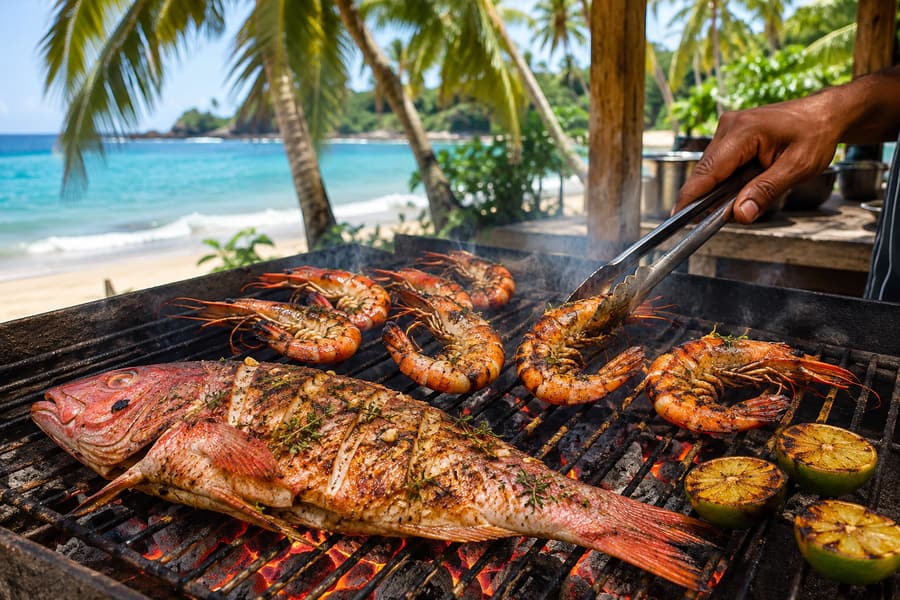
Goraka. The dried rind of the fruit of a Garcinia tree. The segments are dried until they turn black. Goraka is sour and a little smoky, and it does for a Sri Lankan fish curry what tamarind does elsewhere. Its great dish is ambul thiyal: tuna with goraka and black pepper, cooked until almost dry. The sourness also helps the fish to keep, which mattered before fridges.
Where are they on our menu?
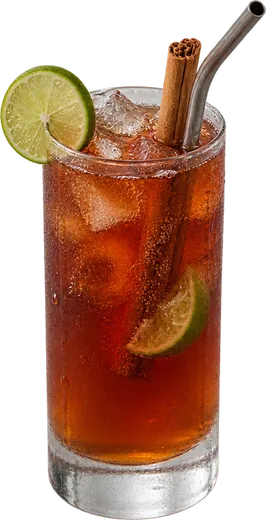
- Cinnamon. In the Ceylon Cinnamon Iced Tea, 1,200 LKR, on the Kithul Waffles, 2,100 LKR, on the Grilled Pineapple, 1,700 LKR, and as whole sticks in the sauce of the Mahi Mahi Pineapple Curry, 6,900 LKR.
- Cardamom. In the schug, the green chilli relish on our Yemeni Shakshuka, 3,250 LKR. In the Glow Shot, 1,350 LKR, the Date & Almond Shake, 2,400 LKR, and the Ashwagandha Moon Milk, 2,400 LKR.
- Cloves. Only in the teapot, for now. About ten whole cloves in your pot of Ceylon Tea are 300 LKR on top of the 700 LKR pot. About five cracked cardamom pods or a cinnamon stick cost the same.
- Pepper. Everywhere in the kitchen. It is most itself in the Cleanse Shot, 1,200 LKR, where black pepper meets fresh turmeric root, ginger and lemon.
- Turmeric. In the Sri Lankan Omelette, 2,400 LKR, whose eggs it turns gold. In the Sweet Prawn Curry, 6,700 LKR, and its vegan way, the Vegan Sweet Curry, 6,200 LKR. In the Cleanse Shot and the Moon Milk.
- Rampe. In the Milk Rice, 1,850 LKR, red rice cooked in coconut cream with the pandan leaf. And in the pineapple and coconut curry sauce.
- Goraka. Not on our menu today. Our two curries are the coconut kind, and lime does the sour work in this kitchen.
Curry leaf, which is a leaf and not a spice, has its own page: curry leaf, or karapincha.
Is Sri Lankan food always hot?
No. Spiced and hot are two different things. Cinnamon, cardamom, cloves, turmeric and rampe carry no heat at all. The heat comes from chilli and, more softly, from pepper.
At Ohana, food is not spicy unless the dish says so. The Sweet Prawn Curry is gentle on the chilli and rich with coconut milk. The dishes that do carry heat are marked on the menu.
If you want to understand the whole plate, read Sri Lankan curry explained.
What does Ayurveda say about spices?
A great deal. In Ayurveda, cinnamon and cardamom are traditionally used to help digestion, turmeric is paired with black pepper, and ginger is considered warming. These are old traditions, and modern research has not confirmed most of them. We cook with spices because they taste of this island. They are food, not medicine.
Can you take spices home?
Yes. Whole spices keep their smell far longer than ground ones, so buy quills, pods and whole peppercorns. Rampe and curry leaves are best fresh, so they are the two that you can only really taste here.
The best way to learn a spice is on a plate. Ours are waiting at our restaurant on Turtle Beach, Dikwella, where what the island grows is how we cook.
Good to know
- Breakfast is served from 08:00 to 11:00. Lunch and dinner are served from 11:00 to 21:00, every day.
- Food is not spicy unless the dish says so. Tell us how much heat you like.
- Prices are in LKR, plus a 10% service charge. Filtered water is on the house.
- Tell us about any allergy: ours is one shared kitchen.
- We are at Turtle Beach, Dikwella, less than five minutes by road from Hiriketiya.