The guide · The island's pantry · 5 min read
Ceylon cinnamon, true cinnamon and how to tell it
Ceylon cinnamon is the inner bark of a tree native to Sri Lanka. How it differs from cassia, how the bark is peeled by hand, and where it is on our menu.
Ceylon cinnamon, also called true cinnamon, is the inner bark of a tree native to Sri Lanka, peeled by hand and rolled into thin, soft quills of many layers. Most of what the world sells as cinnamon is cassia, a harder and darker bark from related trees. Here is how to tell them apart, how the bark is peeled, and where it sits on our menu.
What is true cinnamon?
The tree is Cinnamomum verum, a small evergreen of the laurel family. Its older name, Cinnamomum zeylanicum, comes from Ceylon, the island's former name, and that tells you where it is from. Sri Lanka still grows most of it: about 80 to 90 percent of the world's supply of this species.
Left alone the tree reaches 10 to 15 metres. On a farm it is cut low and kept as a bush about three metres high, so that it keeps sending up straight young shoots. The spice is the inner bark of those shoots. In Sinhala it is kurundu.
Since February 2022 the name "Ceylon Cinnamon" has been protected in the European Union as a geographical indication, the first Sri Lankan product to have one.
How do you tell it from cassia?
Cassia comes from related trees grown mainly in China, Vietnam and Indonesia. It is cheaper, and in many countries it is simply sold as "cinnamon". Put the two side by side and the difference is easy to see.
- The quill. Ceylon cinnamon is many paper-thin layers rolled one inside another, like a cigar. Cassia is one thick layer curled inward, with a hollow in the middle.
- The colour. Ceylon is light tan brown. Cassia is darker and reddish.
- The feel. Ceylon is soft and crumbles between the fingers. Cassia is hard, and difficult to break.
- The taste. Ceylon is mild, sweet and fragrant. Cassia is stronger, hotter and a little bitter.
There is one more difference you cannot see. Cassia holds far more coumarin, a natural substance in the bark. Germany's federal institute for risk assessment advises people who use a lot of cinnamon to choose Ceylon cinnamon, which contains only low levels.
Ground cinnamon is harder to judge, so read the label: look for "Ceylon" or Cinnamomum verum.
How is the bark peeled?
By hand, with skills and tools that belong to this island. The steps have hardly changed.
- The cut. The first harvest comes about three years after planting. Shoots are cut twice a year, after the monsoon rains.
- The same day. The sticks must be peeled on the day they are cut. The peeler sits on the floor to work.
- Scraping. The rough outer bark is scraped off.
- Rubbing. The stick is rubbed with a brass rod. This loosens the inner bark from the wood.
- Peeling. Two long cuts are made, and the inner bark is lifted off in one piece without tearing.
- Filling. The thin strips are laid one inside another and overlapped end to end, until they make a quill about a metre long.
- Drying. The quills dry indoors on racks under the roof for four to seven days. As they dry they curl tight and turn golden.
Quills are graded by their thickness. The finest, called Alba, is less than 6 mm across. The leaves and twigs are not wasted: they are used for cinnamon oil.
Where does it grow, and why did it matter so much?
Cinnamon country is the south-west and the south of the island, in the Western and Southern provinces, the province we live in. The district of Negombo, north of Colombo, is known for the finest.
For centuries the bark was peeled from wild trees, and it was worth a fortune far away. It is one of the reasons three European powers came here. The Portuguese arrived in 1505. The Dutch pushed them out by 1658, and in the later 1700s they began the first cinnamon plantations. The British took the island in 1796.
In traditional medicine cinnamon has long been used to help digestion. We use it because it smells of the island. It is food, not medicine.
Where is cinnamon on our menu?
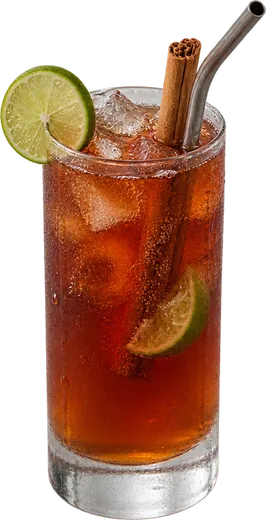
- Ceylon Cinnamon Iced Tea, 1,200 LKR. Our house syrup of strong Ceylon tea, cinnamon bark and sugar, made here in small batches, over ice with lime. Sparkling or still.
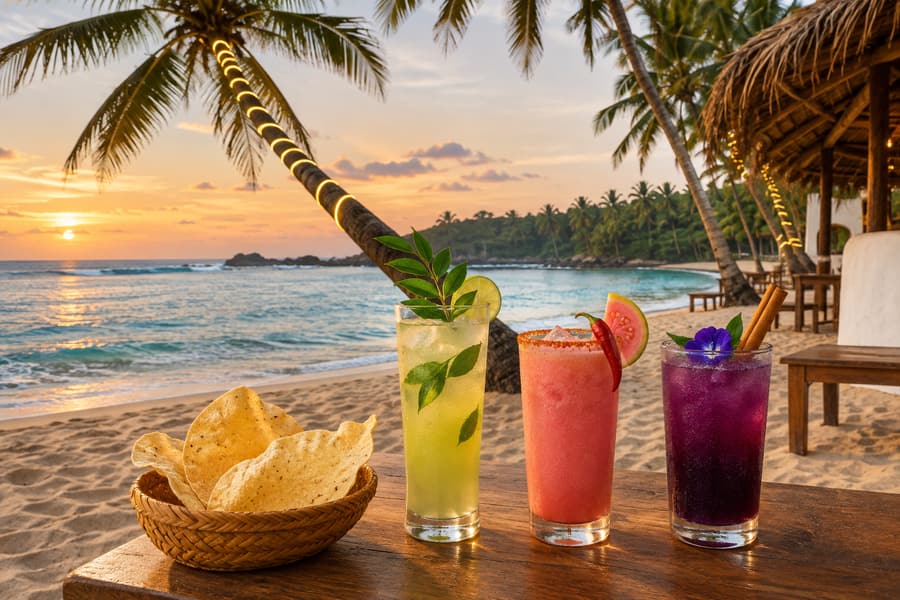
- Twilight Fizz, 1,500 LKR. Butterfly pea blue, turned violet by a squeeze of lime, with a whisper of our Ceylon cinnamon tea.
- Kithul Waffles, 2,100 LKR. With kithul treacle, vanilla ice cream and a dust of cinnamon.
- Grilled Pineapple, 1,700 LKR. Thick slices in cinnamon sugar, straight off the grill, with vanilla ice cream. The vegan way, with cold coconut cream, is the same price.
- Milk Rice, 1,850 LKR. Red rice cooked in coconut cream, hiding a layer of caramelised coconut inside. Cinnamon is part of the recipe.
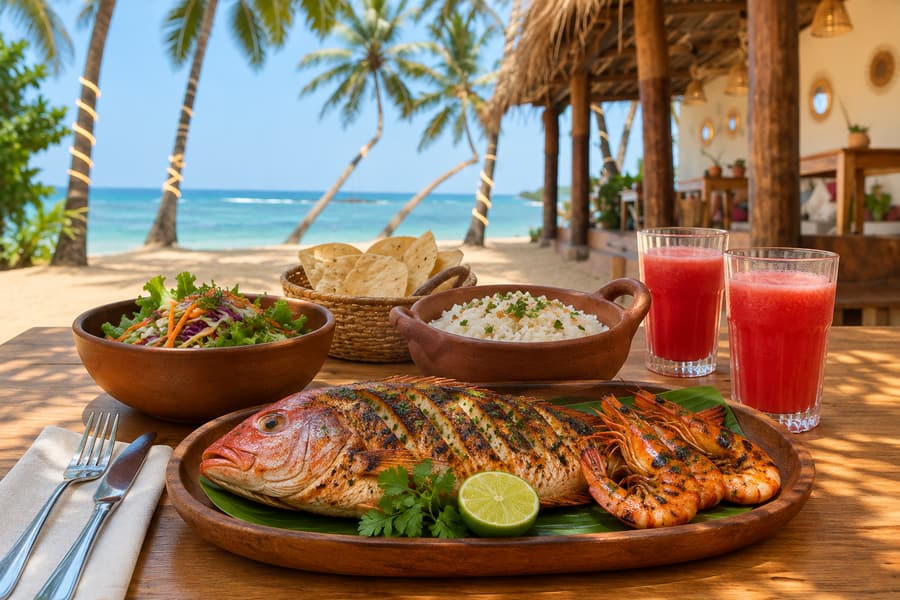
- Mahi Mahi Pineapple Curry, 6,900 LKR. Whole cinnamon sticks simmer in the sauce with curry leaves and ginger.
- Glow Shot, 1,350 LKR, Date & Almond Shake, 2,400 LKR and Ashwagandha Moon Milk, 2,400 LKR. Each has a pinch.
- A cinnamon stick in your pot of Ceylon Tea. The pot is 700 LKR, the stick 300 LKR.
It also hides in our granola, in the pickled red onion and in the slow mushroom ragù on the Roasted Eggplant.
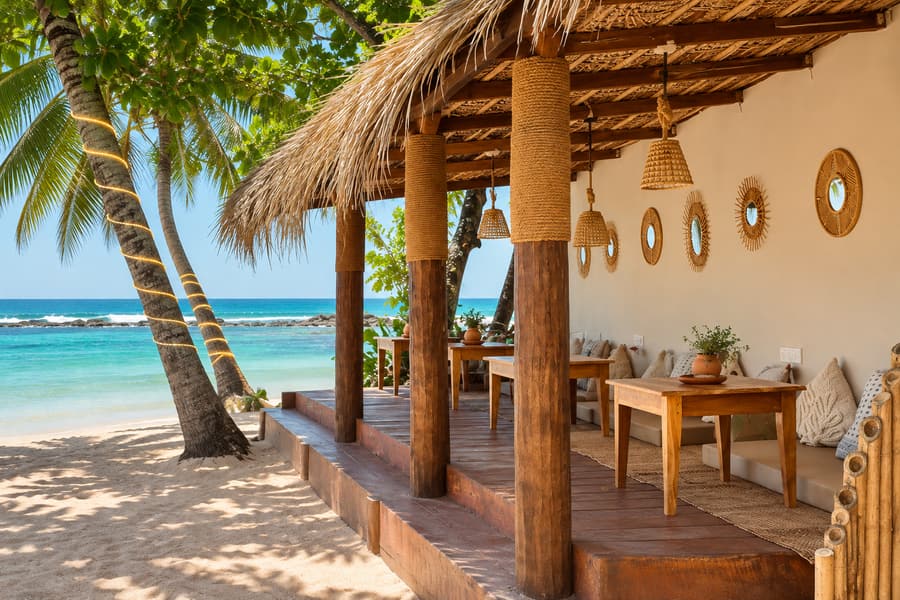
The tea in that first glass has its own story, in Ceylon tea, explained, and the other spices of the pot are in Sri Lankan spices, a short guide. To taste cinnamon the way the island uses it, come to our restaurant on Turtle Beach, Dikwella, where what the island grows is how we cook.
Good to know
- Iced teas and mocktails are served all day, from 08:00 to 21:00. Waffles and Milk Rice are breakfast dishes, served from 08:00 to 11:00.
- Grilled Pineapple and the curry are served from 11:00 to 21:00.
- Prices are in LKR, plus a 10% service charge. Filtered water is on the house.
- We are at Turtle Beach, Dikwella, less than five minutes by road from Hiriketiya.