The guide · Seafood and where to eat · 5 min read
The fish of Sri Lanka's south coast, and how to eat it
Tuna, mahi mahi, snapper, prawns and calamari on the south coast of Sri Lanka. How to tell a fresh fish, how each is eaten, and our dishes with them.
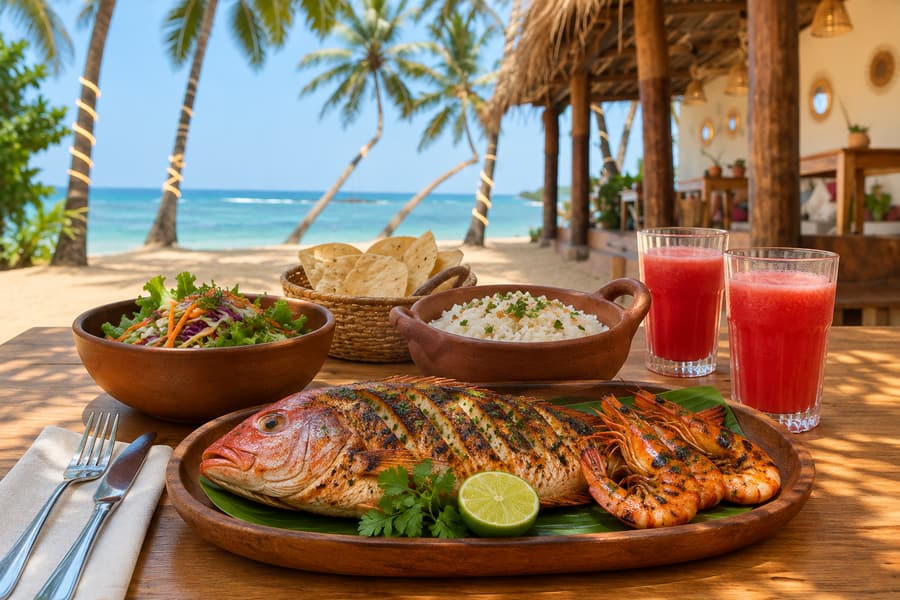
The fish you meet most on the south coast of Sri Lanka are tuna, mahi mahi and snapper, with prawns and calamari beside them. Tuna is eaten raw or seared, mahi mahi goes into curries and onto the grill, and a snapper is at its finest whole, on the bone.
What is caught on the south coast?
Fish is everyday food here. Coastal Sri Lanka cooks with seafood as a matter of course, fresh or dried, and the island's kitchens use tuna, mackerel, sprats and more.
At Dikwella you can still see how the small catch comes in. At the sheltered Pehembiya end of the bay, inshore fishermen use the oru, a small, brightly painted canoe with an outrigger, which is easy to steer over the sandbars.
These are the five you will find on menus between Matara and Tangalle:
- Tuna. The island's working fish, eaten fresh and also cured and dried into Maldive fish, which seasons sambols and vegetable curries all over the country.
- Mahi mahi. Also called dolphinfish or dorado. It is a fish, not a dolphin. It lives near the surface in warm open water and is one of the fastest-growing fish in the sea.
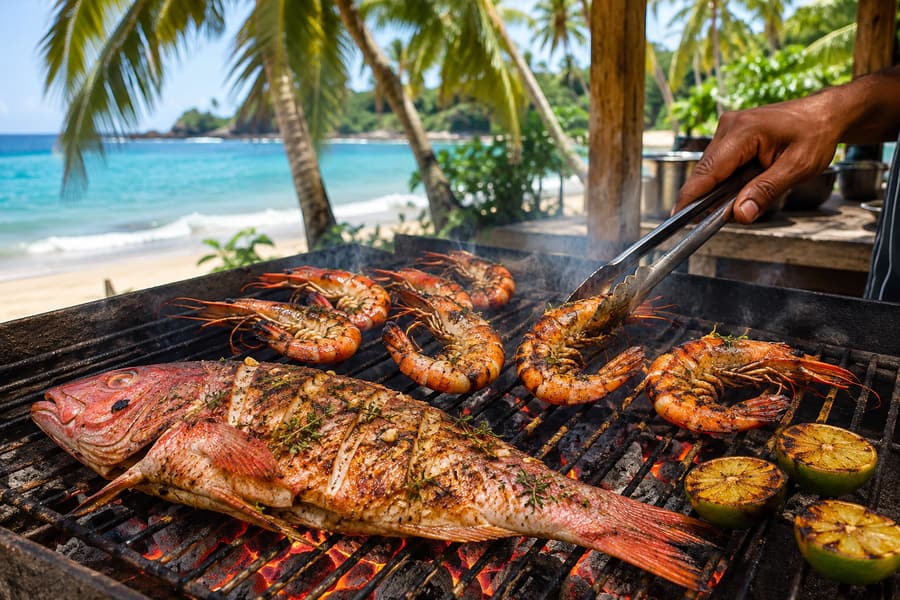
- Snapper. A white fish, and the one we grill whole.
- Prawns and shrimps. Small ones for curries and salads, jumbo ones for the grill.
- Calamari. Squid, cut into rings or grilled.
Is there a season for fish?
The sea has seasons more than the fish do. On the south coast the water is calmest from about December to April. The south-west monsoon, from about May to September, brings rougher sea and more rain.
In the rough months the sea decides more often than the cook, and a menu that depends on the day's catch changes with it. Ours says so in plain words: it is subject to availability. If the tuna did not come in, the honest answer is "not today", and it is a good sign when a kitchen says it.
How do you tell a fresh fish?
You can check a whole fish yourself, at a market or at a restaurant that shows you the catch. Food authorities give the same few signs:
- The smell. Fresh fish smells mild. A sour, strong or ammonia smell means no.
- The eyes. Clear and shiny, not cloudy or sunken.
- The gills. Red, with no smell.
- The flesh. Firm. Press it and it springs back.
- A fillet. No darkening and no drying at the edges. Fresh tuna is red.
- Prawns. The flesh looks clear and pearly, with little or no smell.
Colour alone tells you little: it changes with what the fish ate and where it lived.
One more thing matters with mahi mahi and fish like it: the cold. It must be kept cold from the boat to the kitchen. If it is left warm, a substance called histamine forms in the flesh and can make people ill, and cooking does not take it away. This is why a careful kitchen is fussy about ice.
How is each one eaten, and what do we cook with it?
Tuna is dense and red, closer to meat than to white fish. It is eaten raw, or seared for a moment so the centre stays rare. Cooked through, it turns dry. On our menu:
- Tuna Tartare, 3,400 LKR, and Tuna Tiradito, 3,100 LKR, both raw.
- Tuna Poke Bowl, 4,500 LKR. Raw tuna over warm rice. Spicy.
- Sesame Tuna Filet, 6,900 LKR. In a sesame crust, seared fast, sliced over coconut mashed potatoes.
Every fish we serve raw, tuna and mahi mahi alike, is frozen before it is served.
Mahi mahi cooks white and has a mild taste that is not "fishy" at all, which makes it a good fish for people who think they do not like fish. It holds together in a sauce and takes spice well.
- Mahi Mahi Pineapple Curry, 6,900 LKR. A grilled fillet under a golden curry of coconut milk and sweet pineapple. A little spicy.
- Baja Fish Taco, 1,800 LKR. Spiced mahi mahi in a warm tortilla, priced per taco.
- Ceviche Limeño, 5,700 LKR. Mahi mahi cured to order in lime.
- Ohana Zuppa di Pesce, 6,900 LKR. With shrimps and calamari, in fish stock and tomatoes.
Snapper wants little: fire, garlic, a herb. Cooked whole on the bone it stays juicy, and the bones give the flesh its taste.
- Grilled Catch of the Day, 7,900 LKR. A whole snapper basted with garlic and thyme. It takes 25 to 40 minutes on the grill.
- Red Snapper for Two, 15,900 LKR. About a kilo of fish with everything around it.
Prawns cook in minutes and go hard if they wait. Grill the big ones hot and fast, and let the small ones finish in the sauce.
- Grilled Jumbo Prawns, 7,900 LKR, with chimichurri. A little spicy.
- Sweet Prawn Curry, 6,700 LKR. The prawns cook in the coconut milk. Gentle.
- Papaya & Prawn Salad, 3,600 LKR.
Calamari has the same rule: very quick, or it turns to rubber.
- Coconut Calamari, 5,700 LKR. Rings in coconut and panko, fried in small batches so each stays crisp.
Where to go from here
If raw fish is new to you, read ceviche, tartare and tiradito explained. For the curries, there is Sri Lankan curry explained. And if you want the fish itself, with the bay in front of you, this is the page of our seafood restaurant near Hiriketiya and Dikwella.
Good to know
- Ohana is at Turtle Beach, Dikwella, less than five minutes by road from Hiriketiya, and open every day.
- Lunch and dinner are served from 11:00 to 21:00. Prices are in LKR, plus a 10% service charge.
- The menu depends on the day's catch, and every dish lists its allergens.
- Food is not spicy unless the dish says so. No alcohol is served.